
· by Michael Blair, Nashville's Junk Removal
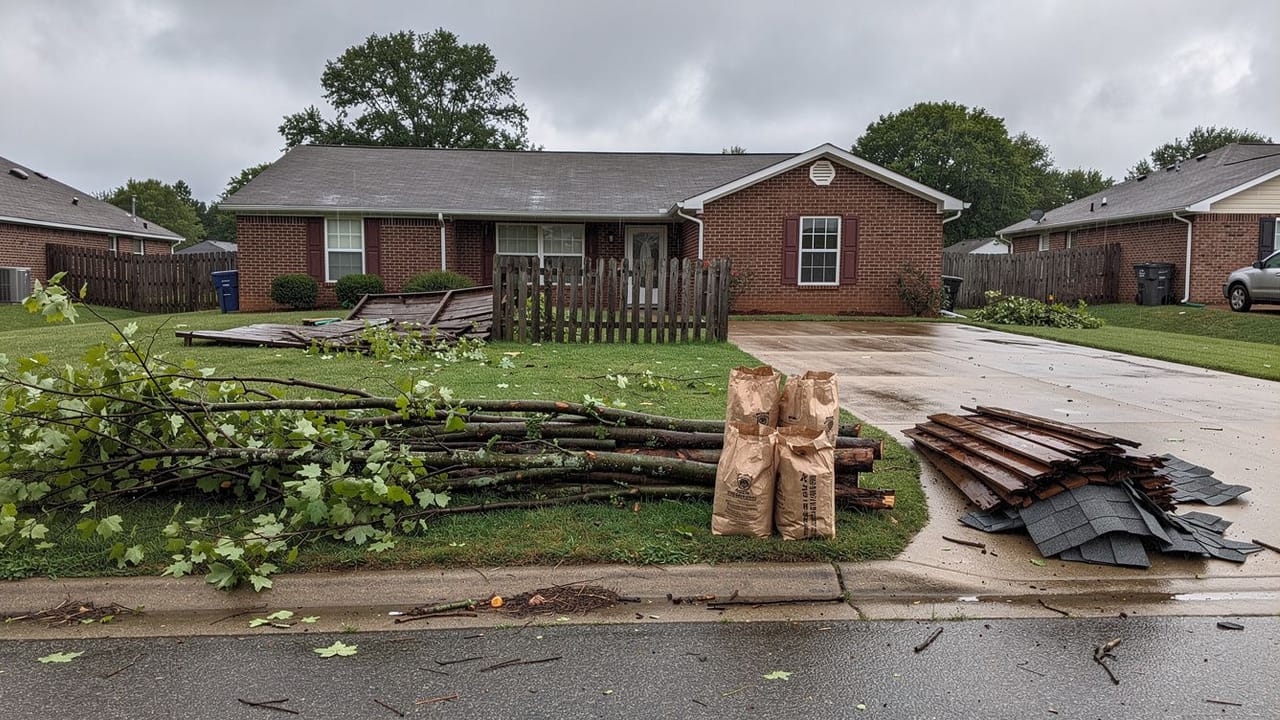
Middle Tennessee storms leave a particular mess: tree limbs across the lawn, a section of privacy fence flat on the ground, shingles in the flower beds, a trampoline in the neighbor’s yard. The clean-up is the same set of decisions every time. What can go to the curb for Metro, what has to go to a convenience center or a hauler, what to photograph for the insurance claim, and what needs a professional because it is too big or too dangerous to handle. Getting the sort right at the start saves a second round, and the broken fence, lumber and roofing Metro won’t take are the kind of load our construction debris removal is set up for.
What goes to the curb
Brush pickup in Davidson County is run by the Nashville Department of Transportation and Multimodal Infrastructure, not Public Works. According to Metro’s brush and leaf collection page, crews collect brush and yard waste from single-family homes in the Urban and General Services Districts four times a year, on a rotation along 12 routes, and they don’t collect on private streets or in Forest Hills, Berry Hill or Belle Meade. The page describes that rotation and no special storm pickup, so plan around your route’s turn. The Nashville Waste Wizard gives the start date, and Metro says a route normally takes one to three weeks to finish.
What the crews take is limbs, branches and true yard waste. Branches can be up to 4 inches in diameter and 12 feet long, stumps up to 8 inches across with the dirt and root ball knocked off, and leaves and grass clippings go out in biodegradable paper bags, never plastic. Fence boards, deck boards and treated posts are lumber and the shingles are debris, and Metro’s rules keep both out of the brush pile along with household trash. If a tree or landscaping company did the cutting, Metro Code 10.20.085 makes disposing of it that company’s job rather than the brush truck’s.
The truck is a knuckle boom with a mechanical arm, and only the driver rides with it; Metro says nobody else is there to move a pile or pull out what doesn’t belong. So keep the brush apart from everything else, stack it end to end or on top of itself close enough to the curb or roadway for the arm to reach, and leave the arm room to work. Height matters less than placement. Nothing goes against a mailbox, tree, fence, utility pole or guardrail, or in a median, a ditch or anywhere rain can wash it into a storm drain, and a pile set too far back from the curb or the right-of-way won’t be collected.
If your route’s turn is months off and the pile is in the way, the same page lists a free option for Davidson County residents: brush and yard waste can go to Living Earth at 1511 Elm Hill Pike or 6401 Centennial Boulevard, though a trailer load is charged a fee and hours vary through the year.
What does not, and where it goes instead
Fence panels, deck boards, pressure-treated wood, roofing, siding, gutters, sheds and their contents, and anything that was a structure are construction and demolition debris, and the convenience centers are less help with it than most people expect. Metro’s convenience center page lists roofing shingles, siding, gutters, posts, poles and pallets among the materials no center accepts, with brush and leaves on the same list. Only the Omohundro center takes do-it-yourself construction debris, for a $20 fee, and Metro’s pages disagree on the cap: two cubic yards there, one on Metro’s bulk item page, so plan on the smaller. You unload it yourself after showing a Tennessee driver’s license with a Davidson County address, and Metro turns away waste that arrives in a commercial vehicle, which includes any vehicle with business advertising on it.
Bigger loads go to the private sites the bulk page lists, such as Triune Residuals Management in Hermitage for roofing shingles and lumber, each setting its own fees. Anything over the Omohundro cap, or anything you can’t lift and haul yourself, is where a junk removal company comes in.
A hauler takes the mixed pile in one visit, but the two halves still end up in different places. The green waste can go to a site like American Farms, which Metro lists for trees, stumps, roots, logs and brush, and the shingles and lumber to a construction debris site like Triune, which sits at a landfill. Ask any hauler where its loads go and what it charges by. We quote by how much of the truck a load takes up, which our post on how junk removal is priced walks through.
- Limbs and brush within Metro’s size limits: the curb on your route’s turn, or Living Earth
- Leaves and grass clippings: biodegradable paper bags at the curb, never plastic
- Fence and deck boards in small amounts: Omohundro; roofing, siding and gutters: a hauler or a private debris site
- A whole tree down, or limbs on a roof or a line: a tree service first
- Anything touching a power line: stay back, call 9-1-1, and leave it to the utility
When do you need a tree service before a hauler?
A large tree down across the yard is not a debris pile yet; it is a tree that has to be cut, and that is a tree service. OSHA’s tree care hazards page calls many of the industry’s hazards potentially fatal and names overhead power lines and falling branches among them, and its guidance on clearing downed trees after winter storms adds falls and chainsaw and chipper injuries, with gloves, chaps, eye, hearing and head protection for anyone running the saw. A limb on the roof, a tree leaning on the house, or anything near a service drop belongs to the tree service as well.
Anything touching a line is the utility’s problem before it is anyone else’s. NES’s storm guide says to stay at least 30 feet from power lines (another section of the same guide says 35) and assume every wire is live, to leave limbs on a line to the professionals, and to call 9-1-1 to report hazardous conditions. Two more things on that page catch people out. NES crews may cut a broken tree to repair a line, but removing the debris afterward is the property owner’s responsibility. And if the storm damaged the weatherhead, mast, meter base or feeder lines on your side, NES says its crews can’t safely reconnect power and you will need an electrician licensed and registered by your county.
Metro’s brush page has a line worth reading before you sign with a tree service: if you hire someone to cut, make sure hauling the brush and debris away is in the price and that the company does the hauling. What the crew leaves behind, the smaller brush and the raked-up mess, is the yard waste and hauler question.
If the storm damage is an insurance claim, document the debris before it moves. Ready.gov’s guide to recovering from a disaster says to take photos and make a list before you clean up, and to save every receipt for repair and cleanup. Photograph the fallen tree on the fence, the shingles in the yard and the damaged structure before anything is cleared, so the pictures show what landed on what. Whether your policy pays for debris removal, and up to what limit, is a question for your insurer before the work starts; keep the tree service and hauler invoices with the rest.
How can a storm cleanup go faster?
Sort as you go, into the two piles. Cut brush to Metro’s limits and stack it at the curb, and put the construction debris in one place the hauler’s truck can back up to. Poke through a pile with a stick before reaching into it; Ready.gov warns about animals in storm debris, poisonous snakes especially.
Keep the hazards out of both piles. Metro’s household hazardous waste page takes oil-based paint, rechargeable and car batteries, gasoline and pesticides free at the East and Ezell Pike convenience centers, up to 15 gallons or 100 pounds per household a month, which covers the gas cans that kept the generator running. Propane tanks and latex paint are on its list of items it won’t take, so ask your propane supplier about a dented cylinder. The rest of what stays off a truck is in our list of what junk removal companies will not take.
When a storm crosses the whole county, call as soon as the piles are sorted rather than waiting for the weekend, ask for an arrival window rather than a day, and get the price basis in writing. A company that shows up, loads the whole pile and leaves the yard raked is what you are paying for, and it is the job we quote when you ask us for a free estimate.
Sources
- Nashville Department of Transportation and Multimodal Infrastructure, Brush and Leaf Collection in Davidson County — Four collections a year on 12 routes for single-family homes; excluded areas; 4-inch by 12-foot branch limit and 8-inch stumps; paper bags for leaves; no lumber or debris in the pile; placement rules; driver-only knuckle boom truck; Waste Wizard and one to three weeks per route; Metro Code 10.20.085 and hauling in a hired cutter’s price; Living Earth drop-off
- Metro Nashville Department of Waste Services, Convenience Center Services — Materials not accepted (roofing shingles, siding, gutters, posts, poles, pallets, brush and leaves); construction and demolition material at Omohundro only, $20, two cubic yards; Tennessee driver’s license; no commercial vehicles
- Metro Nashville Department of Waste Services, Bulk Item Recycling — Do-it-yourself construction debris limited to one cubic yard at Omohundro; larger loads to American Farms (green waste), Triune Residuals Management at a landfill (shingles, lumber) and MTEC
- Metro Nashville Department of Waste Services, Household Hazardous Waste — East and Ezell Pike accept batteries, oil-based paint, gasoline and pesticides free up to 15 gallons or 100 pounds; propane tanks and latex paint not accepted
- Nashville Electric Service, Storm Guide — Stay 30 (or 35) feet from power lines; leave limbs on lines to professionals; call 9-1-1; owner removes storm tree debris; weatherhead damage needs a licensed electrician
- OSHA, Tree Care Industry: Hazards and Solutions — Many tree care hazards potentially fatal, including overhead power lines and falling branches
- OSHA, Winter Weather: Hazards (Removing Downed Trees) — Downed-tree hazards: electrocution, falls, chainsaw and chipper injuries; protective equipment for saw and chipper work
- Ready.gov, Recovering from Disaster — Photograph and list damage before cleanup; save receipts; watch for snakes in debris
FAQ
Storm Debris and Yard Waste After a Nashville Storm — questions
Will Metro pick up storm debris from my yard?
Metro’s brush crews collect limbs, brush and paper-bagged leaves from single-family homes in the Urban and General Services Districts four times a year on a rotation, with branches no more than 4 inches across and 12 feet long. They do not take lumber, fence boards, roofing or other debris mixed into the pile. Check Metro’s brush collection page or the Nashville Waste Wizard for your route’s start date before staging a pile.
Who removes a tree that fell in my yard?
A tree service cuts it, and Metro expects a hired tree or landscaping company to haul away what it cuts rather than leave it for the brush truck, so make sure hauling is in the price. If the tree is on a structure or touching a power line, do not cut it yourself; stay well back and call 9-1-1 to report a line down. The remaining brush and any damaged fence or roofing go to Metro collection or a junk hauler as appropriate.
Does homeowners insurance pay for storm debris removal?
It depends on the policy, so ask your insurer whether debris removal is covered and what the limit is before the work starts. Either way, photograph the damage and make a list before anything is cleared, and save every receipt for repair and cleanup, which is the advice Ready.gov gives after a disaster.
What are the dangers of storm debris?
Power lines, falling branches, saws and hidden animals. NES says to stay at least 30 feet from lines and assume every wire is live, OSHA adds falls and chainsaw and chipper injuries for anyone cutting, and Ready.gov warns that snakes shelter in debris, so poke a pile with a stick before reaching in.