
· by Michael Blair, Nashville's Junk Removal
We haul almost everything that comes out of a Nashville house, and the short list we leave behind has more to do with where those things would end up than with how heavy or awkward they are. Federal law leaves most of this to state and local governments: according to EPA’s household hazardous waste page, household hazardous waste is regulated as solid waste on the state and local level, so the rules that decide where it goes are Tennessee’s and Metro’s. Any company you call will have its own list, so ask them for it.
What won’t a junk removal crew load?
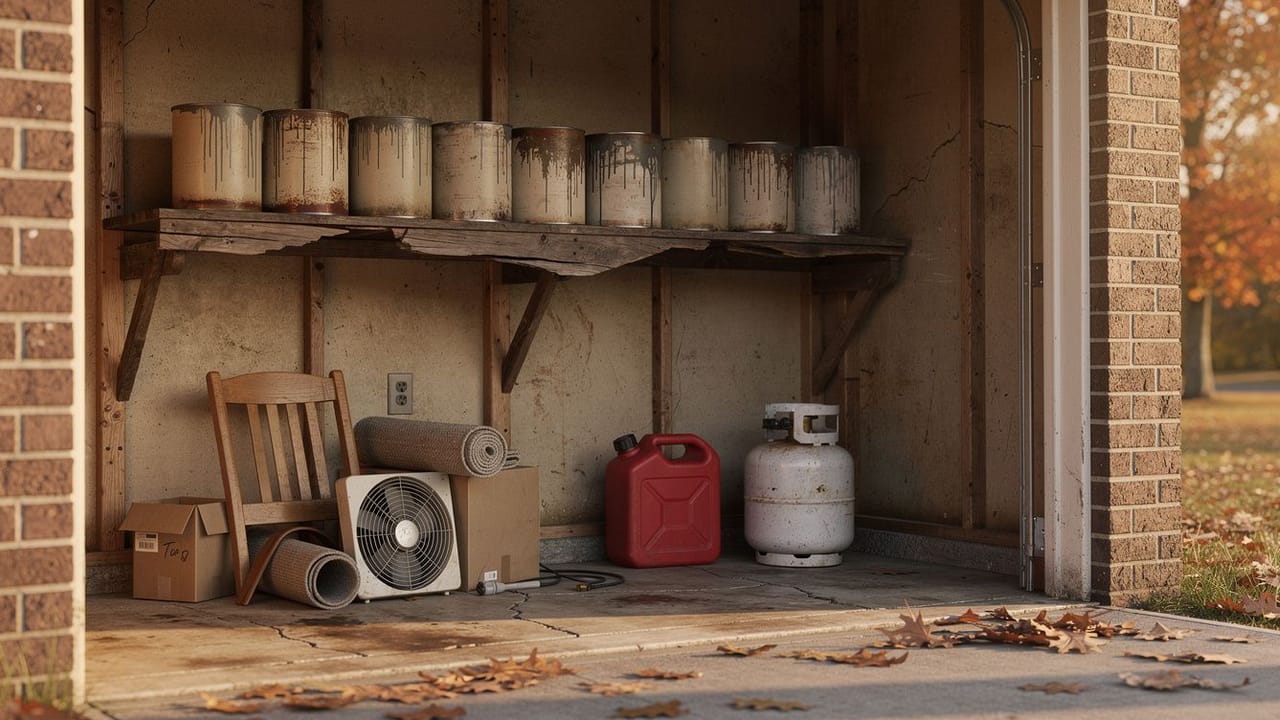
We don’t load paint thinner and solvents, oil-based paint, motor oil, gasoline and other fuel, pesticides, pool chemicals, asbestos, medical waste or pressurized cylinders such as propane tanks. EPA counts paints, cleaners, oils, batteries and pesticides among the household products that can contain hazardous ingredients, and liquid paint has a particular problem in this state: TDEC’s household paint guidance says landfills and transfer stations in Tennessee will not accept individual paint cans that still hold liquid paint.
Tires and electronics are a separate case. We can usually take them, but neither goes out with the rest of the load. Tennessee keeps whole tires out of its landfills, and under TDEC’s waste tire program they go to a permitted processing facility or to the collection site every county has to provide for residents and businesses. If either one changes the price of your job, we will say so when you book.
Where do paint, fuel and chemicals go instead?
In Davidson County the answer for most of the list is Metro’s free drop-off at the East and Ezell Pike convenience centers. Metro’s household hazardous waste page lists oil-based paint, paint thinner, motor oil, gasoline, pesticides and pool chemicals among what it accepts, and it sets limits worth knowing before you load the car: Davidson County residents only, up to 15 gallons or 100 pounds a household each month, and nothing that arrives in a commercial or work vehicle. That last rule is why our truck cannot take your cans there for you. Metro also turns away latex and acrylic paint, medical waste and propane tanks. Outside Nashville and Davidson County, the state’s household hazardous waste program runs mobile collection events open to any Tennessee resident, held in the fall and spring, and keeps temporary containers around the state for year-round drop-off.
Electronics have their own route: residents with valid Davidson County identification can recycle them at the East, Ezell Pike and Omohundro convenience centers, and Metro’s electronic waste recycling page says there is no fee. Latex paint goes the other way entirely. The same TDEC paint guidance says latex paint is not hazardous and that unusable latex should be solidified and thrown away, using shredded mulch, sawdust or wood chips to firm it up, and that empty, dry cans can be recycled with scrap metal. That guidance dates from 2010, so read the latex paint instructions Metro links from its hazardous waste page before you start on a shelf of half-used cans.
- Oil-based paint, thinner, motor oil, fuel, pesticides, pool chemicals: Metro’s household hazardous waste drop-off, Davidson County residents only
- Asbestos: trained, accredited asbestos professionals, never a junk removal load
- Tires: a permitted processor or a county waste tire collection site
- Electronics: free Metro recycling with Davidson County identification
- Propane tanks: not accepted at Metro’s hazardous waste drop-off, so call 615-862-5000 or ask where you exchange them
- Latex paint: mixed with sawdust or wood chips until solid, then household trash
Asbestos in particular
Older Nashville houses may have it in floor tile, pipe insulation, textured ceilings and roofing. TDEC’s asbestos information page names sprayed-on or textured ceiling material, pipe and boiler insulation, floor tiles and their mastics, and roofing felts and shingles, and says any structure built before 1975 may contain significant amounts. We treat that year as a guide rather than a line, and we don’t take suspect material at any age of house.
Removing it is work for trained, accredited professionals. Tennessee’s asbestos accreditation program requires accreditation for asbestos work in schools and in public and commercial buildings, while the federal demolition and renovation rules on EPA’s asbestos laws and regulations page exclude residential buildings with four or fewer dwelling units, so a single house sits in a grayer area than people expect. In Davidson County, TDEC says demolition and asbestos renovation work falls under a local air agency, which is the office to ask before anything is pulled up or torn out.
The risk is disturbing it. TDEC says intact and undisturbed asbestos-containing material usually does not pose a health risk, and that the problem starts when fibers are released by damage, disturbance or deterioration over time. A clear-out is exactly when that happens by accident: a dresser dragged across cracked basement tile, or boxes pulled off a shelf that rests on wrapped pipe.
Ask before the truck arrives
Tell us what is in the pile when you book, and mention anything coming out of a garage or a shed, since that is where paint cans, fuel and cylinders tend to collect. On our garage, attic and shed clear-outs we ask about those shelves first, and our post on getting ready for a visit covers what to set aside beforehand.
Knowing ahead saves a wasted trip and the time spent sorting cans on the driveway. List anything you are unsure about in your free estimate request, and we will tell you which pieces stay behind before anyone drives out.
Sources
- US EPA, Household Hazardous Waste (HHW) — Household hazardous waste is regulated as solid waste on the state and local level; paints, cleaners, oils, batteries and pesticides can contain hazardous ingredients
- Tennessee Department of Environment and Conservation, Household Paint Management Guidance (November 2010) — Tennessee landfills and transfer stations will not accept cans of liquid paint; latex paint is not hazardous and should be solidified with mulch, sawdust or wood chips and thrown away; empty, dry cans recycled with scrap metal
- Tennessee Department of Environment and Conservation, Waste Tire Program — Whole tires may not be landfilled in Tennessee; disposal at a permitted processing facility or a county waste tire collection site, which each county must provide
- Metro Nashville Waste Services, Household Hazardous Waste Collection — Free drop-off at East and Ezell Pike for Davidson County residents, 15 gallons or 100 pounds a month; accepted and refused items, including latex paint, medical waste, propane tanks and work vehicles; 615-862-5000
- Tennessee Department of Environment and Conservation, Household Hazardous Waste Program — Mobile collection events open to any Tennessee resident, fall and spring only; temporary containers for year-round drop-off
- Metro Nashville Waste Services, Electronic Waste Recycling — Free electronics recycling at East, Ezell Pike and Omohundro for residents with valid Davidson County identification
- Tennessee Department of Environment and Conservation, Asbestos Information — Where asbestos is found in buildings; structures built before 1975 may contain it; undisturbed material usually not a health risk; Davidson County work under a local air agency
- Tennessee Department of Environment and Conservation, Asbestos Program — Accreditation required for asbestos activities in schools and in public and commercial buildings
- US EPA, Asbestos Laws and Regulations — Asbestos NESHAP covers demolitions and renovations, excluding residential buildings with four or fewer dwelling units
FAQ
What Junk Removal Companies Will Not Take — questions
Can junk removal take old paint?
Not while it is still liquid. Tennessee’s paint guidance says landfills and transfer stations in the state will not accept individual cans of liquid paint. If you live in Davidson County, oil-based paint can go to Metro’s free household hazardous waste drop-off at the East or Ezell Pike convenience center. Latex paint is not hazardous and Metro does not take it there: mix it with sawdust, wood chips or shredded mulch until it is solid, and it can go out with household trash.
What about asbestos in an old house?
We do not take it, and removal should be left to trained, accredited asbestos professionals. In older Nashville houses it may be in floor tile, pipe insulation, textured ceilings and roofing. TDEC says intact, undisturbed material usually does not pose a health risk; the danger comes from damaging or disturbing it, so leave suspect material where it is during a clear-out and ask before any work touches it.
Will they take electronics and tires?
Usually, but mention them when you book, because neither can go out with the rest of the load. Whole tires cannot be landfilled in Tennessee and have to go to a permitted processor or a county tire collection site. Davidson County residents can also recycle electronics at no charge at Metro’s East, Ezell Pike and Omohundro convenience centers, which may be the simpler route for a single television or computer.
What is considered household hazardous waste?
Leftover household products with hazardous ingredients, which the EPA says include paints, cleaners, oils, batteries and pesticides. Federal law leaves them to state and local rules, so in Davidson County Metro’s list decides: oil-based paint, thinner, motor oil, gasoline, pesticides and pool chemicals go to its drop-off, while latex paint does not.