
· by Michael Blair, Nashville's Junk Removal
An upright piano tends to stay in a family long after anyone plays it, because getting rid of it feels wrong. Then the house is sold or the room is needed, and the family finds out how few people want one. A thrift store may say no, a listing for a free piano can sit unanswered, and the people who do reply often back out once they hear about the stairs. If the piano is part of a bigger job, such as clearing out a parent’s house, it pays to sort it out early: what it is worth, who might take it and how it comes apart, all before anyone lifts it.
Is an old piano worth anything?
Age alone does not make a piano valuable. Before we haul one, we suggest having a piano technician look at it, because the maker, the soundboard, the pin block that holds the tuning pins and whether it still holds a tune are the things that person judges. One visit should tell you whether the instrument is worth restoring, worth selling as it is, or worth only its parts, and it is better to know that before anyone pays to move a piano to a home that turns out not to want it.
Many pianos carry a serial number, often on the cast iron plate under the lid, and a technician can use it with the maker’s name to place the instrument’s age. A piano from a well-known maker that is still in good order may be worth offering through a dealer or a private listing. Years in a damp basement or beside a heating register can be hard on one, and a technician may tell you the repairs would cost more than the piano is worth.
Will anyone take an old piano for free?
Many donation centers do not take pianos, so call before anyone loads one. A church, school or community music program may want an instrument that plays well, and it is fair to ask them who arranges the move. Where we can place something that still has a use, we do, and our donation and recycling service explains how we sort a load before anything goes to landfill.
A private listing works best when the piano is playable and the new owner is ready to pay for the move. Say in the listing how many stairs there are, whether there are porch steps and how wide the door is, because those are what the person taking it will ask about. A free piano still costs someone the price of moving it.
Getting it out of the house
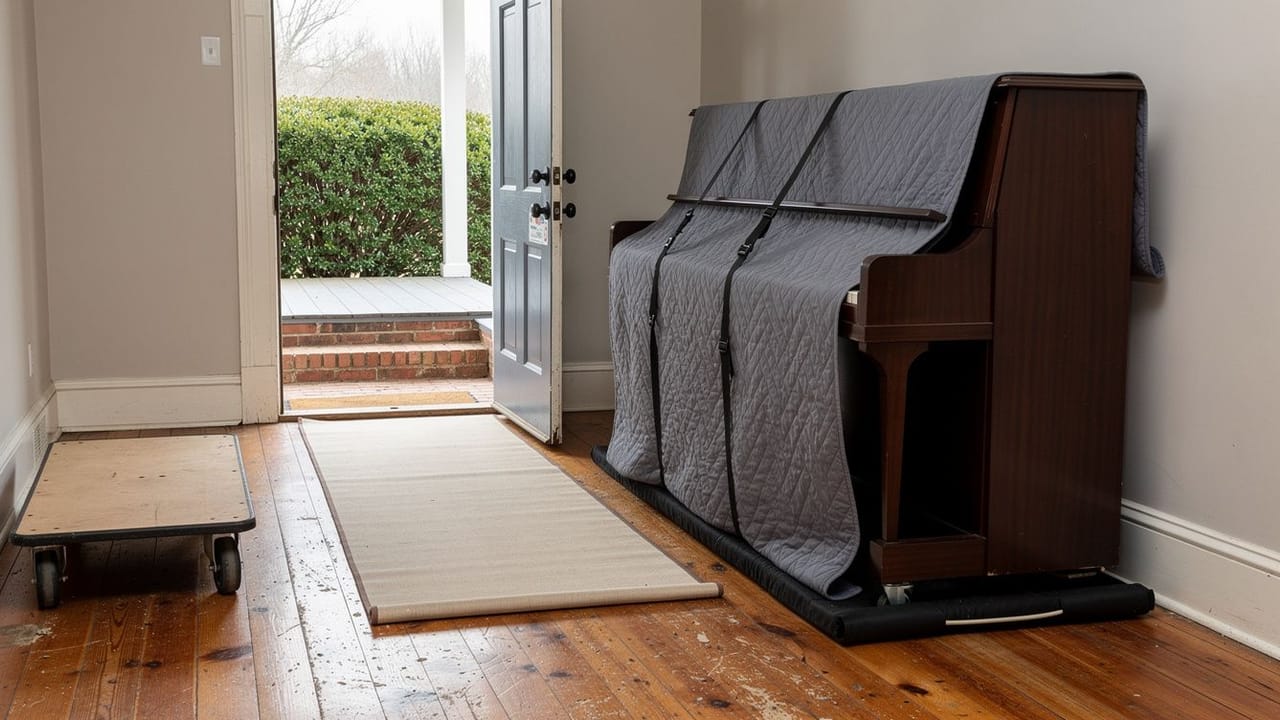
An upright is heavy and awkward, with a cast iron plate inside the cabinet, and we treat it as one of the heaviest single things we move out of a house. We do not roll it across the room on its own small casters, which can mark a hardwood floor. We use a piano dolly or a padded skid board, straps, and enough people to control it on every step, and on older houses we check the porch steps before the piano goes near them. It is the same care our furniture and appliance removal takes with any heavy piece.
Some pianos were carried into a house through an opening that has since been changed, or put in a basement before the stairs were closed in. If it will not leave in one piece, it leaves in several. Our crews walk the route first and decide before lifting anything.
- Door widths and the tightest turn on the way out
- Stairs inside, porch steps and anything soft underfoot
- Floors the piano will cross, and how to protect them
- Where the truck can park, and the slope to reach it
- Whether it leaves whole or in pieces
Taking it apart, and where the pieces go
A piano that is not going to be played again is usually dismantled. The strings together hold a great deal of tension against the plate, and cutting them with snips is how people get hurt, since a string under load snaps back hard and fast. We back the tension off at the tuning pins first, or leave the strings on the plate and lift the whole plate out with them in place.
After that, the parts go different ways. We take the iron plate and the steel strings for scrap metal, and the wood of the cabinet goes to recycling where it can and to landfill where it cannot. None of it belongs at the curb with yard waste: Metro Nashville’s brush collection page tells residents to keep lumber, household trash and other debris out of the brush pile, and it points questions about bulky items and the landfill to hubNashville or 311. Our post on what gets donated, recycled or thrown away goes through the rest of a household the same way.
Keys on older pianos may be topped with ivory, and selling ivory is restricted. The federal rule at 50 CFR 17.40(e) prohibits selling ivory across state lines except for antiques and certain items with a small amount of ivory, and among that exception’s conditions are ivory weighing less than 200 grams in total and an item made before July 6, 2016. The Endangered Species Act’s antiques provision sets other conditions too, starting with an article at least 100 years old that has not been repaired or modified with ivory since December 28, 1973. So we do not offer ivory keys for sale until the rules have been checked for that piano. If you have an upright to move, ask us for a free estimate and tell us about the stairs.
Sources
- eCFR, 50 CFR 17.40(e), African elephant special rule — Interstate sale of ivory prohibited except antiques and de minimis items; under 200 grams, made before July 6, 2016
- U.S. Code, 16 U.S.C. 1539(h), Endangered Species Act exemption for antiques (2023 edition) — Antique is at least 100 years old and not repaired or modified with any part of the species on or after December 28, 1973
- Metro Nashville, Brush and Leaf Collection — Lumber, household trash and other debris stay out of the brush pile; bulky-item and landfill questions go to hubNashville or 311
FAQ
Getting Rid of an Old Piano Nobody Wants — questions
Will a thrift store take an old piano?
Many will not, and the ones that do usually want a playable instrument delivered to them. Call before arranging a move. A school, church or community music program may take one, but a technician’s word that it holds a tune makes that conversation easier.
Is it safe to cut piano strings to take a piano apart?
No. The strings are under heavy tension, and one cut under load whips back with real force. We loosen the tension at the tuning pins first, or remove the iron plate with the strings still attached.
How do I know if my old piano is worth anything?
Have a piano technician look at it. The maker, the serial number, the soundboard and the pin block are what they weigh in deciding whether it is worth restoring or selling. If it no longer holds a tune, the technician may tell you it is not worth the cost of moving it to a new home.
Can I move a piano myself?
Only with the right gear and enough hands, because an upright with its cast iron plate is one of the heaviest single things in a house. We use a piano dolly or a padded skid board, straps and enough people to control it on every step, and we never roll it on its own casters, which can mark hardwood.